
A cell becomes damaged and signals for its removal
It stops dividing and begins releasing pro-inflammatory signals that can alert the immune system to remove it. This is critical for successful wound repair and suppression of tumor growth.
Therapeutic nutrition. Metabolic medicine.
Since 2003, the Inflammation Research Foundation has supported research into dietary approaches to reducing inflammation. This research has led to an integrated dietary program, Metabolic Engineering®, designed to reprogram metabolic pathways to help reduce cellular senescence. Senescent cells generate chronic low-grade inflammation, a key contributor to chronic disease and aging.
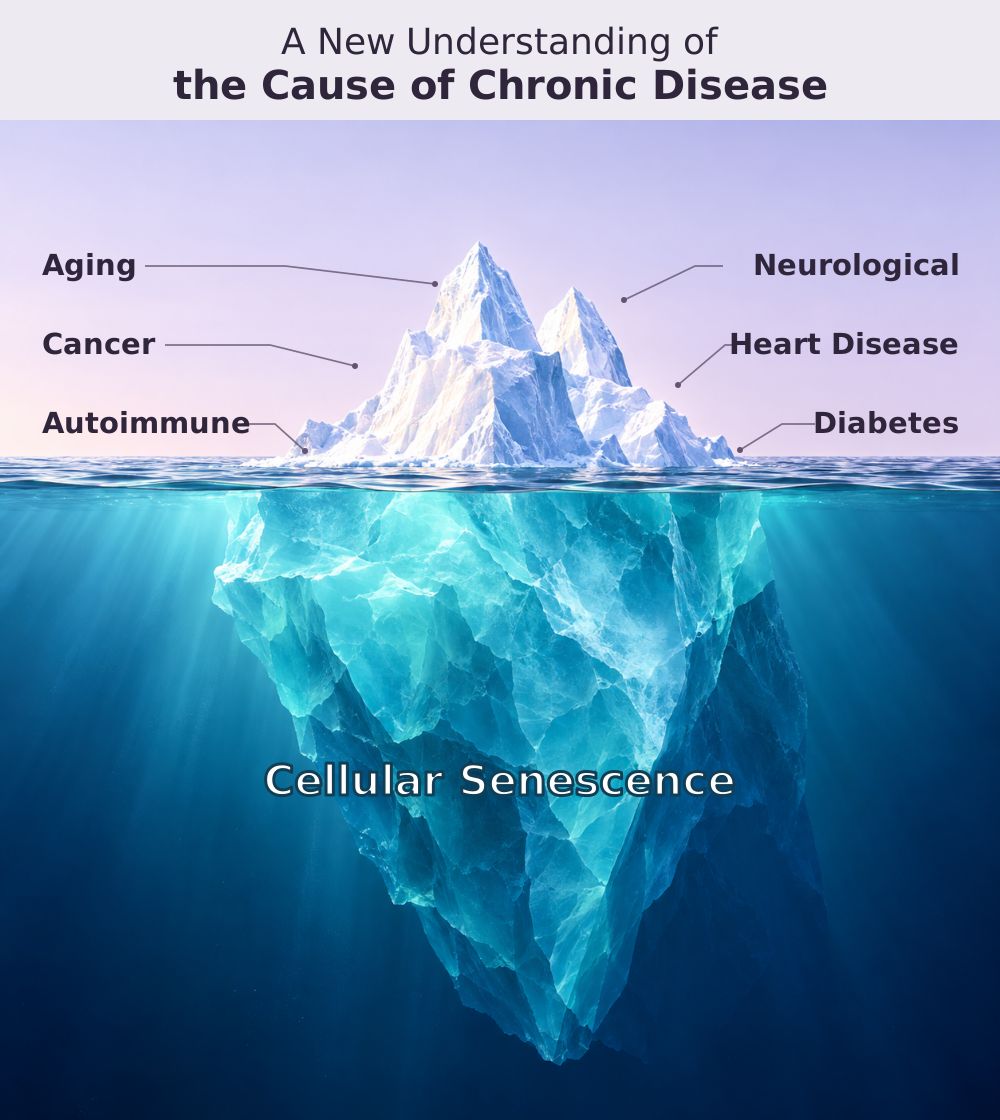
Chronic disease may be driven in part by increasing metabolic damage associated with a growing population of senescent cells.
It stops dividing and begins releasing pro-inflammatory signals that can alert the immune system to remove it. This is critical for successful wound repair and suppression of tumor growth.
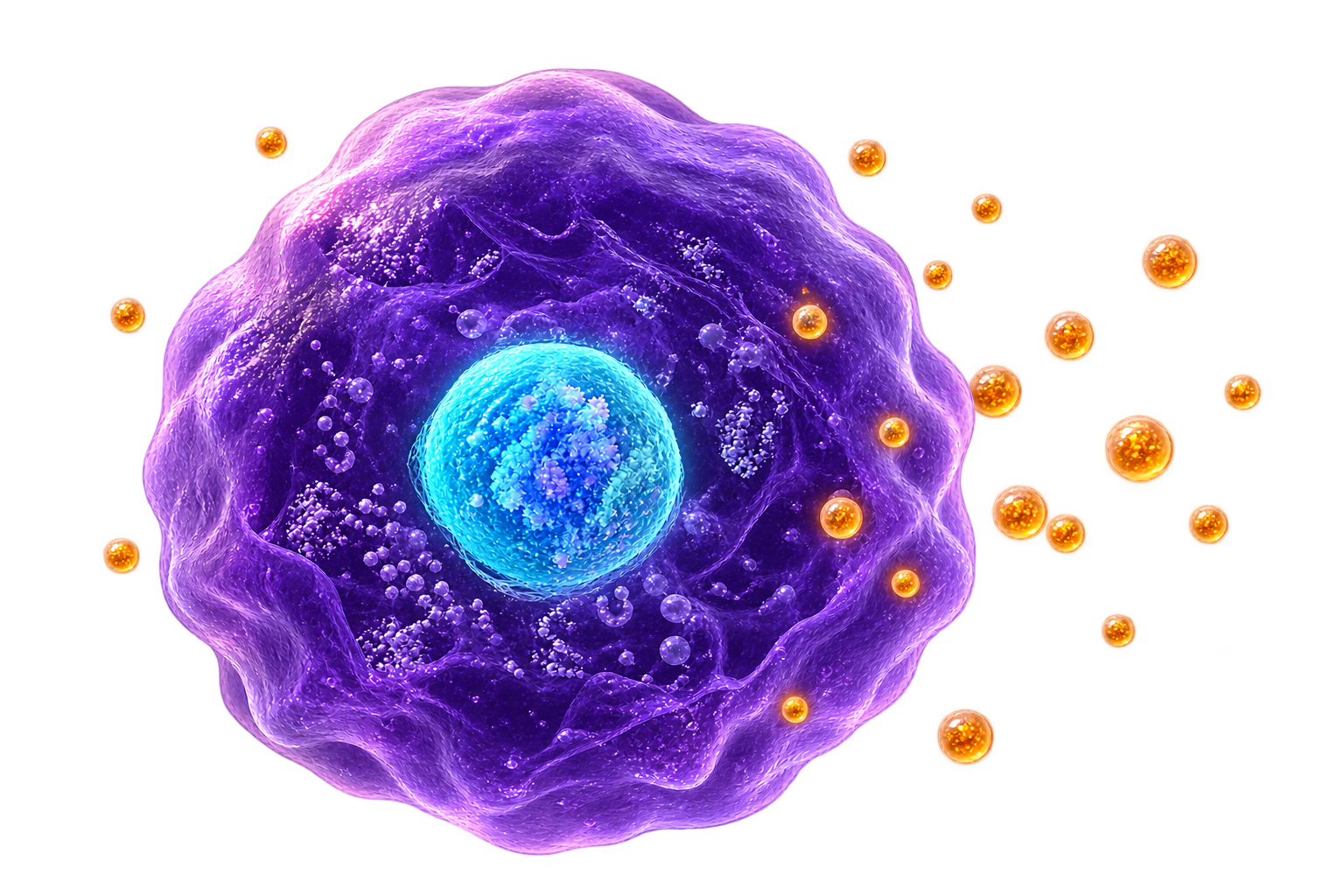
As the immune system ages, it becomes less responsive to these pro-inflammatory signals, leading to increased chronic low-grade inflammation—a process known as inflammaging.

If senescent cells are not removed, their inflammatory signals can drive nearby cells into senescence. This cycle fuels chronic low-grade inflammation, strongly contributing to chronic disease and accelerated aging.
Our research is exploring the connection between cellular senescence and the conditions below.
Click a condition to learn more.
These chronic conditions may be mitigated with a powerful, integrated dietary technology called Metabolic Engineering®, which can help reverse chronic low-grade inflammation driven by increased cellular senescence. The potential effect of Metabolic Engineering® on these conditions is the core of the IRF's continuing research mission.
Metabolic Engineering® is an integrated nutritional system designed to alter metabolic pathways. It comprises several synergistic metabolic interventions: the 4 Rs.
We are not the only ones targeting cellular senescence. Early attempts to treat cellular senescence with combinations of cancer drugs and polyphenols have failed in human clinical trials. New proposed technologies such as vaccines, AI-designed peptides, and antibody-drug conjugates follow standard pharmaceutical thinking: one drug, one target.
Metabolic Engineering® is based on modulating synergistic interactions among metabolic pathways using nutrition. In particular, reducing cytokine-based inflammation by activating AMPK via calorie restriction using a precise protein-to-carbohydrate ratio for improved hormonal responses, resolving lipid-based inflammation by increasing the production of powerful hormones known as resolvins by using high-dose omega-3 fatty acids, removing senescent cells using resolvin-based modulation of the immune system, and finally renewing the tissue by stimulating stem cells to produce new replacement cells through the combined actions of resolvins and mTOR.

GLP‑1 therapies such as semaglutide can help people lose weight, in part by reducing appetite and calorie intake.
Metabolic Engineering® uses nutrition to target pathways involved in inflammation, the removal of senescent cells, and tissue repair. The Inflammation Research Foundation is interested in whether this approach could add to the benefits of medications already in use.
Could combining the two improve outcomes or help patients achieve the same benefit at a lower drug dose? Those are questions for clinical studies.

A pioneer in drug delivery technology, now specializing in dietary control of metabolic pathways.
Dr. Barry Sears started one of the first biotechnology companies in the US in 1976. His early work focused on developing new patentable lipid technologies for novel intravenous cancer drug delivery systems. His patented lipids are still used today in cancer drug delivery.
However, after the 1982 Nobel Prize was awarded for recognizing eicosanoids as hormonal mediators of inflammation, he shifted his research to developing dietary technologies to alter these hormones, drawing on his drug-delivery background. That initial work has evolved into the more complex area of reprogramming metabolic pathways to treat chronic diseases associated with cellular senescence.
The Inflammation Research Foundation (IRF) was founded in 2003 to study the relationship between inflammation and chronic disease. Today, the IRF is focused on research to reduce cellular senescence using Metabolic Engineering®.
Read Dr. Barry Sears' CVMondal K, et al., including Sears B. Molecular Neurobiology. 62:11972–11985.
Read the studyBorja-Magno AI, et al., including Sears B. Frontiers in Nutrition. 10:1156995.
Read the studyBorja-Magno AI, et al., including Sears B. Journal of Nutritional Biochemistry. 120:109415.
Read the studySears B and Saha AK. Frontiers in Nutrition. 8:709435.
Read the reviewIf you’re interested in learning more about the potential applications of Metabolic Engineering® to reprogram metabolic pathways, contact us.
info@inflammationresearchfoundation.org